Journey story
NOLS on Mount Kenya: My 1996 Journal
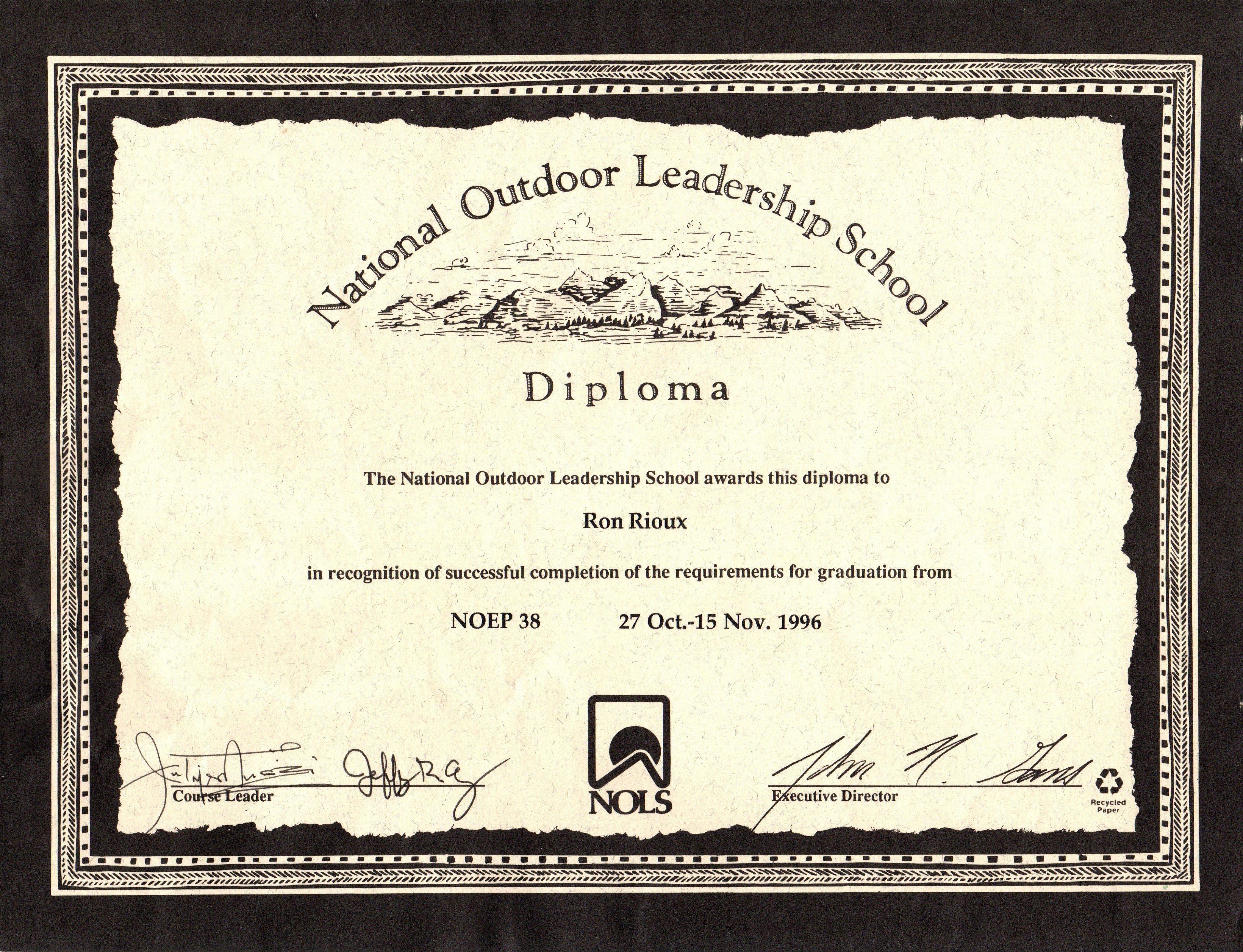
NOEP 38 — October 27 to November 15, 1996 In 1996, while I was serving as a Peace Corps volunteer in Kenya, I used some of my vacation time to attend a National Outdoor Leadership School course on Mount Kenya. NOLS had already been operating in East Africa for more than two decades. Its first East Africa program began in 1974, and Naro Moru became its long-running Kenyan base. The NOLS Outdoor Educator Program, or NOEP, was launched in East Africa in 1987 to teach backcountry travel, leadership, and risk management. My course was NOEP 38, held from October 27 through November 15, 1996. I kept a small spiral-bound journal throughout the course. Most of it consists of exactly what I thought worth recording at the time: where we camped, what we were learning, pieces of mountain history, first-aid notes, and a few events that I described much more casually than I probably would today.
Kenya
What follows is a lightly cleaned transcription of that journal.
Day 1 — October 28, 1996
Camped about 1 km from road.
Day 2 — October 29, 1996
Paul Petzoldt started NOLS.
Always bring a complete day pack with:
- Map and compass
- Sleeping pad
- Rain gear
- Wind gear
- Bivouac
- Notebook and pen
- Food and water
- Puritabs
- Sunscreen
- Sunhat
To be successful: EAT, DRINK, SLEEP.
We also went over water, sanitation, campsite organization, food storage, washing, and keeping camp away from water sources.
Day 3 — October 30, 1996
The animal-safety notes from these first days included:
- Make noise frequently, particularly when entering blind areas.
- Elephants will try to stomp you. Get off the trail.
- Prevention is everything.
- Hyenas hunt in a pack and at night.
- Be in your tent at night with the vestibule closed to prevent animals from seeing movement.
Get water the night before for breakfast.
Organize work for the next morning.
Take out food the night before. Leave three bags of food packed.
Clean up the fire completely.
Later we camped in the giant heath zone.
We bushwhacked through thick forest and thick bamboo zones, not using machetes.
Hiked about 5–6 km in five hours.
Day 4 — October 31, 1996
Last night a hyena ran into our tent on my side and hit my leg. He ripped the tent about four inches and left hair on the tent.
Learned how to bake in the morning.
We baked using an MSR stove, a frying pan, a fitted cover, a wind shield, and small rocks placed around the pan to distribute the heat.
First cornbread came out very nice.
Day 5 — November 1, 1996
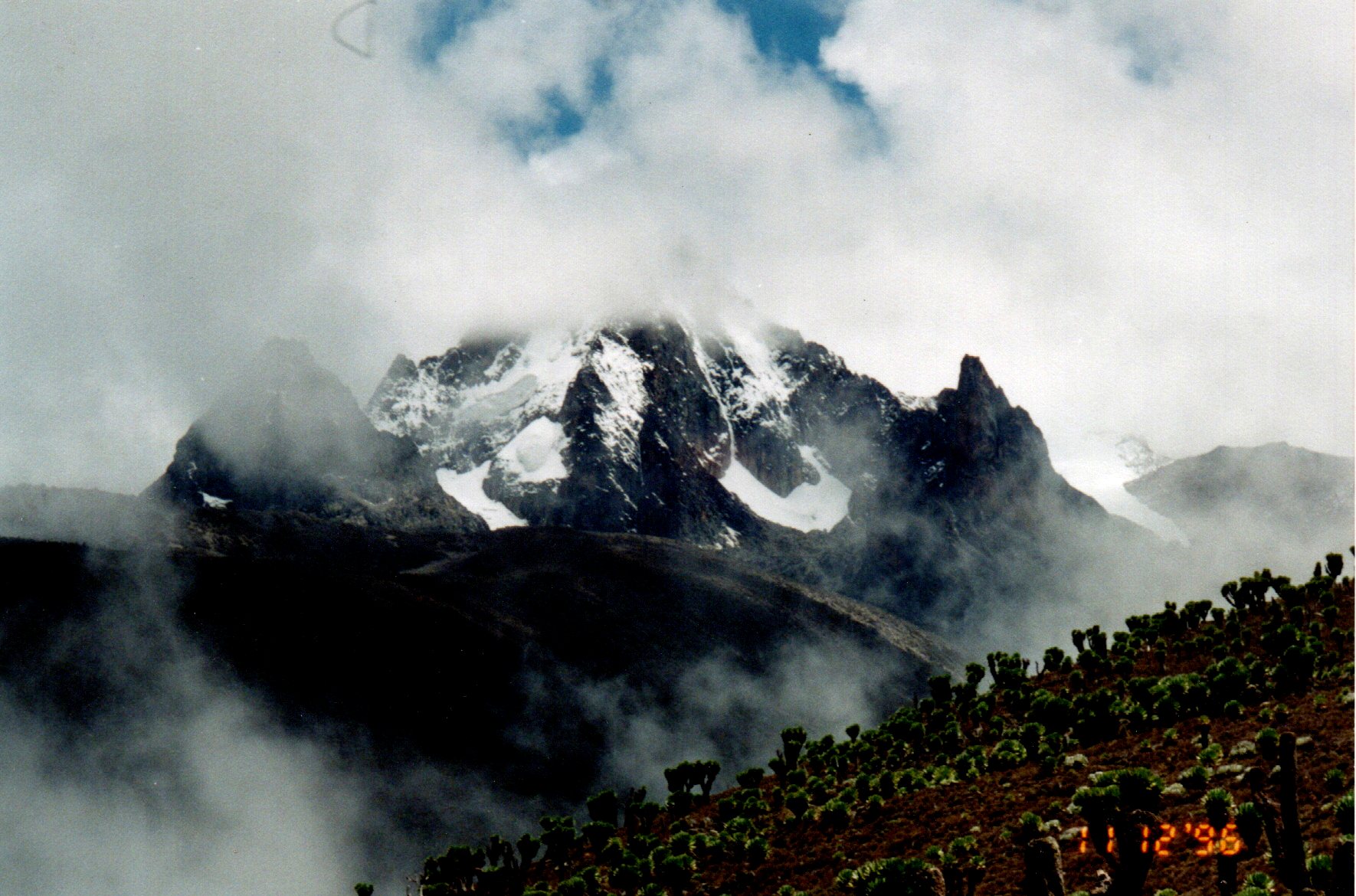
Camped in the moorland zone in view of the peaks and Nanyuki, near the Sirimon River.
Have seen many tracks but no animals yet, although the other group ran into a buffalo on Day 3.
Much of the day's instruction was wilderness first aid: soft-tissue injuries, wound care, bleeding, the primary survey, breathing, circulation, spinal injury, and shock.
Day 6 — November 2, 1996
We continued first-aid training and worked on baking.
Last night our group got to camp and the other group did not show up. So we had only one tent, so I slept in my bivy bag.
Tonight we are camping at Lake Ellis, but the other group has not showed.
Day 7 — November 3, 1996
Set up my own camp last night about 125 yards from the others to avoid noise.
I have been going to bed when it gets dark and waking when the sun rises — about 12 hours.
Last night it seemed to rain most of the night. When I awoke, the small peaks which are visible from Lake Ellis were covered with snow. I took a picture.
I bought a dictionary at NOLS and have been memorizing Swahili vocabulary.
The other group came late in the afternoon.
There was also a review of what to do when groups become separated: team members, leadership, equipment, written information, first aid and foot repair, destination, and starting point.
Day 8 — November 4, 1996
Most of my notes for Day 8 are from wilderness first-aid instruction.
We covered the secondary survey:
1. Vital signs
2. Physical exam
3. Medical history
The notes continue through pulse and respiration, level of consciousness, pupils, skin condition, capillary refill, a head-to-toe physical examination, medical history, and assessing pain.
We also studied expedition behavior and group dynamics.
Day 9 — November 5, 1996
We hiked on our own without the instructors to Gorges Valley.
Took a picture of seven peaks in the valley. There are many waterfalls and cliffs in the valley.
My notes list the vegetation zones as:
- Savannah
- Forest
- Bamboo
- Hagenia
- Heath
- Moorland
- Alpine
- Nival
Camped at Lake Michaelson.
Day 10 — November 6, 1996
Elevation: 15,000 ft.
Camped at Simba Tarn.
First site with snow on the ground.
We also had a Mount Kenya history lesson. My notes from that lesson include the Kikuyu story of Ngai, Gikuyu and Mumbi, as well as notes on Kenya's history.
Day 11 — November 7, 1996
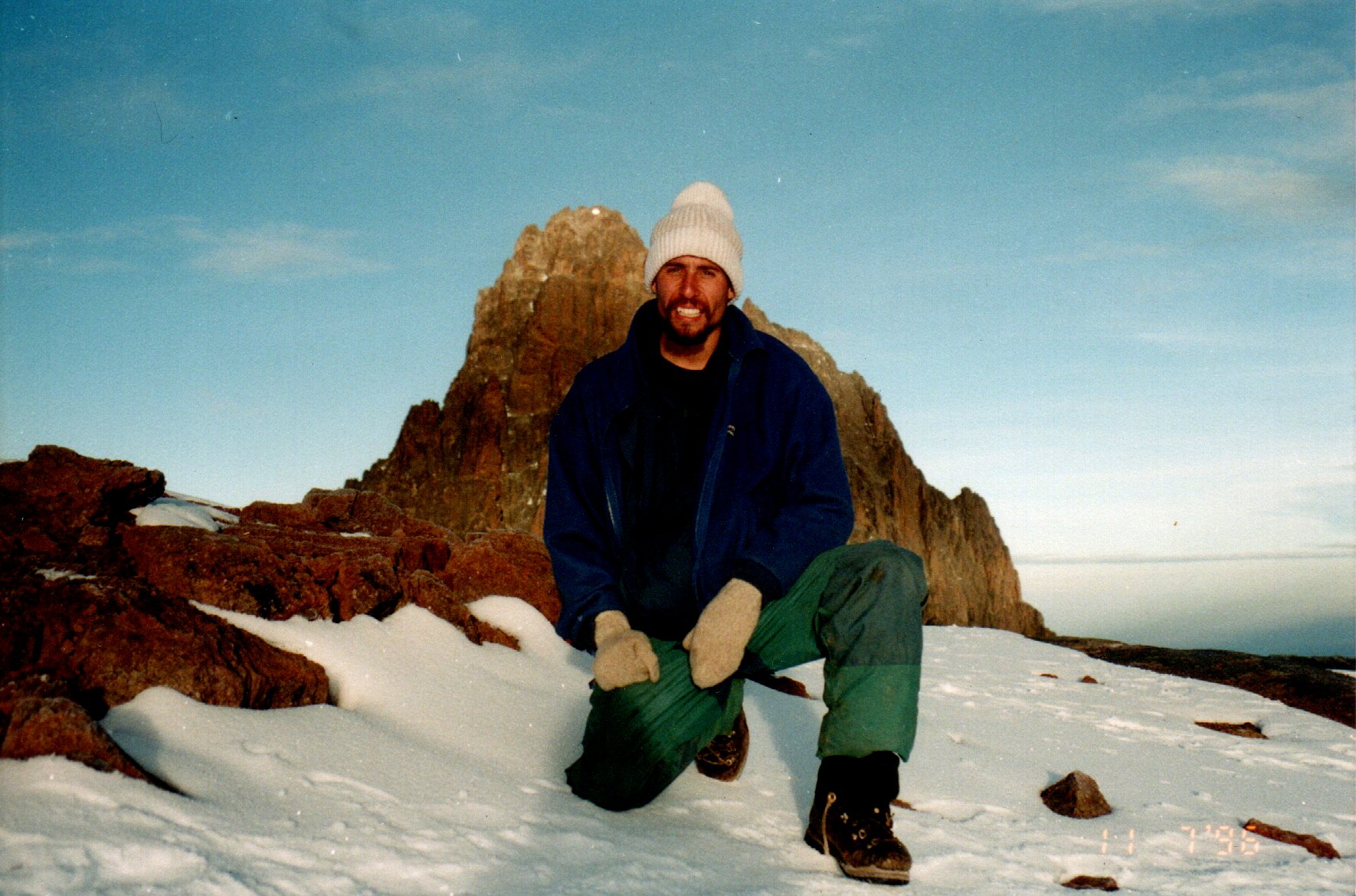
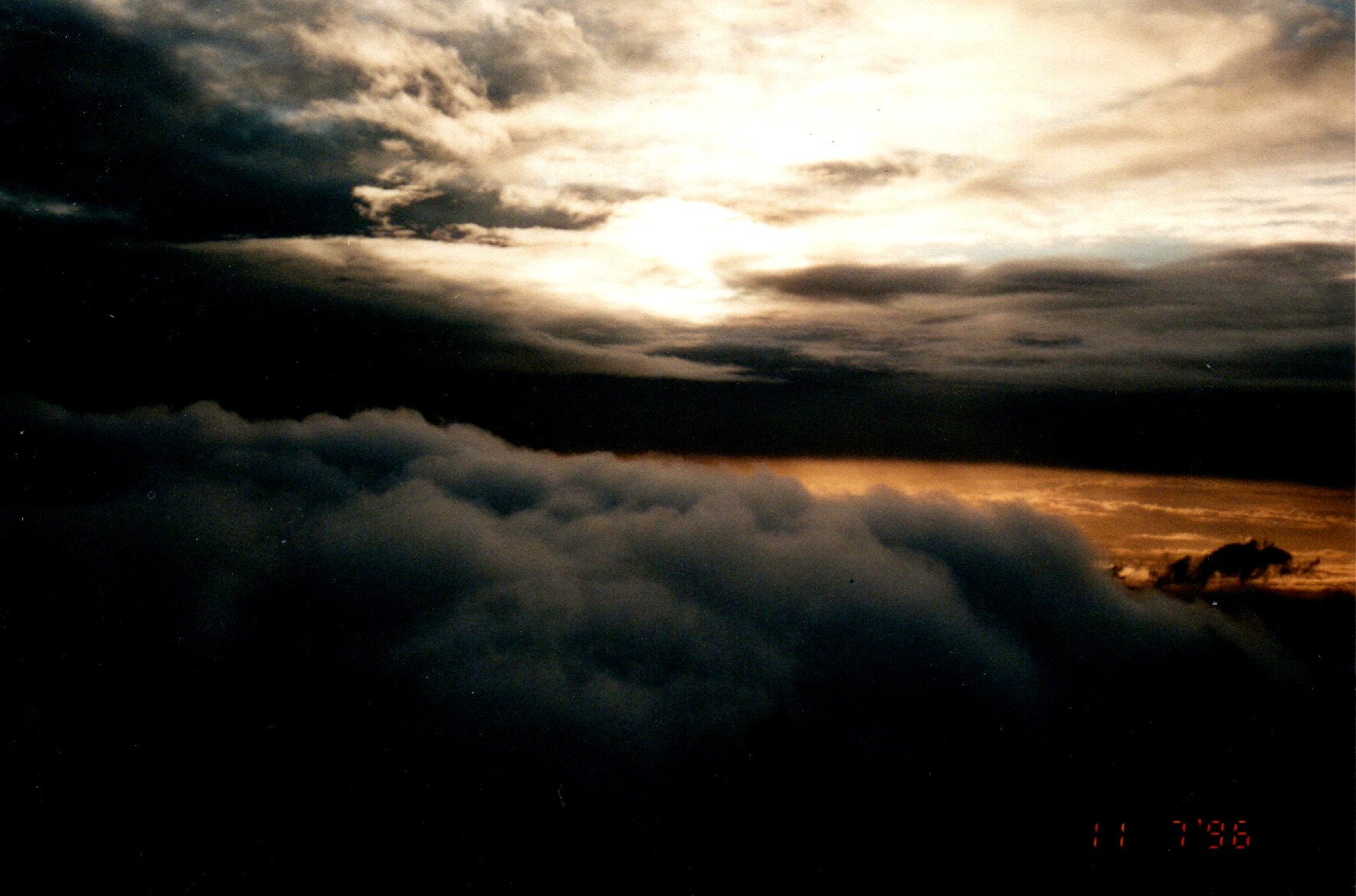
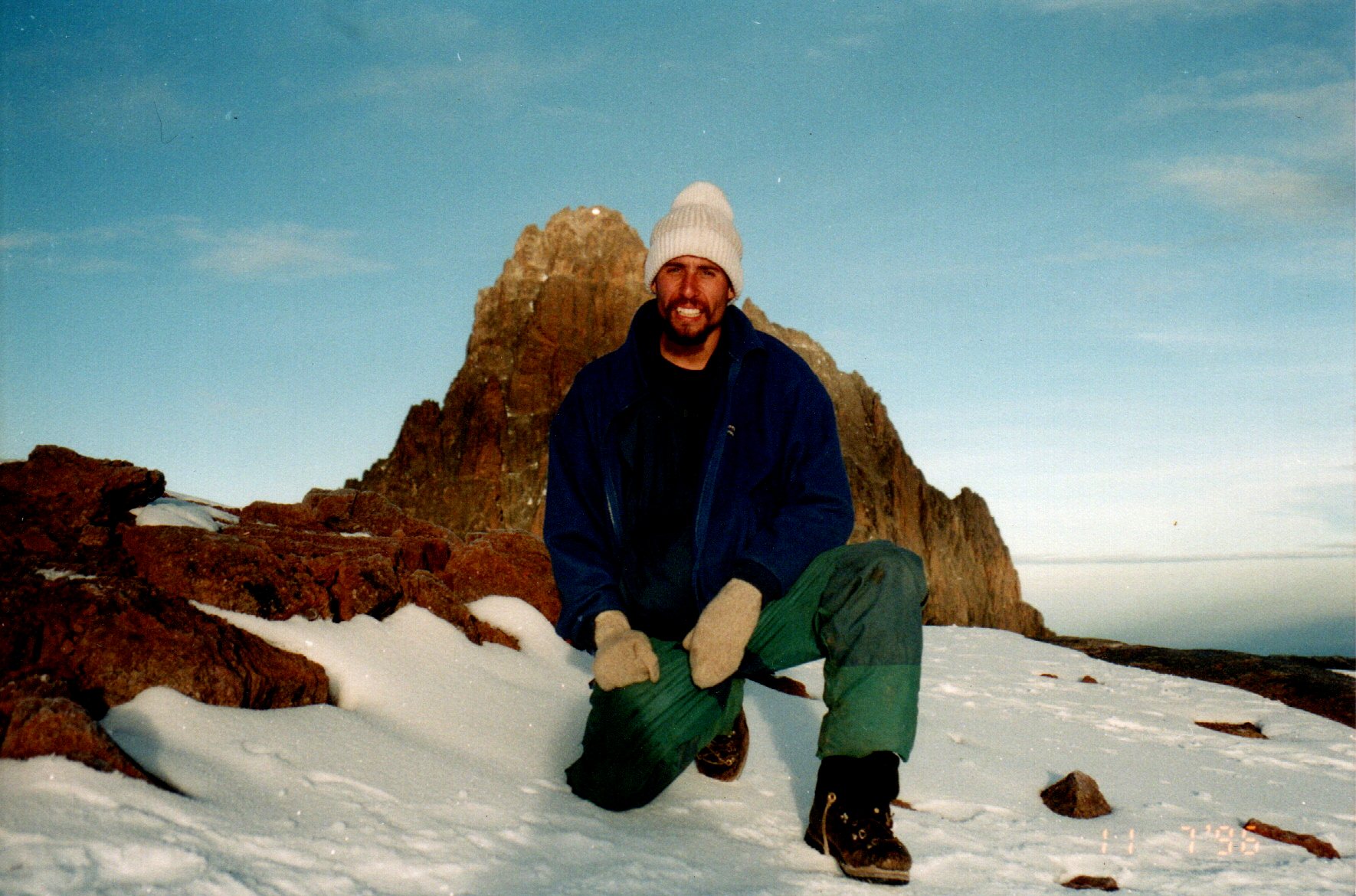
Started at 3 a.m. to hike to Point Lenana.
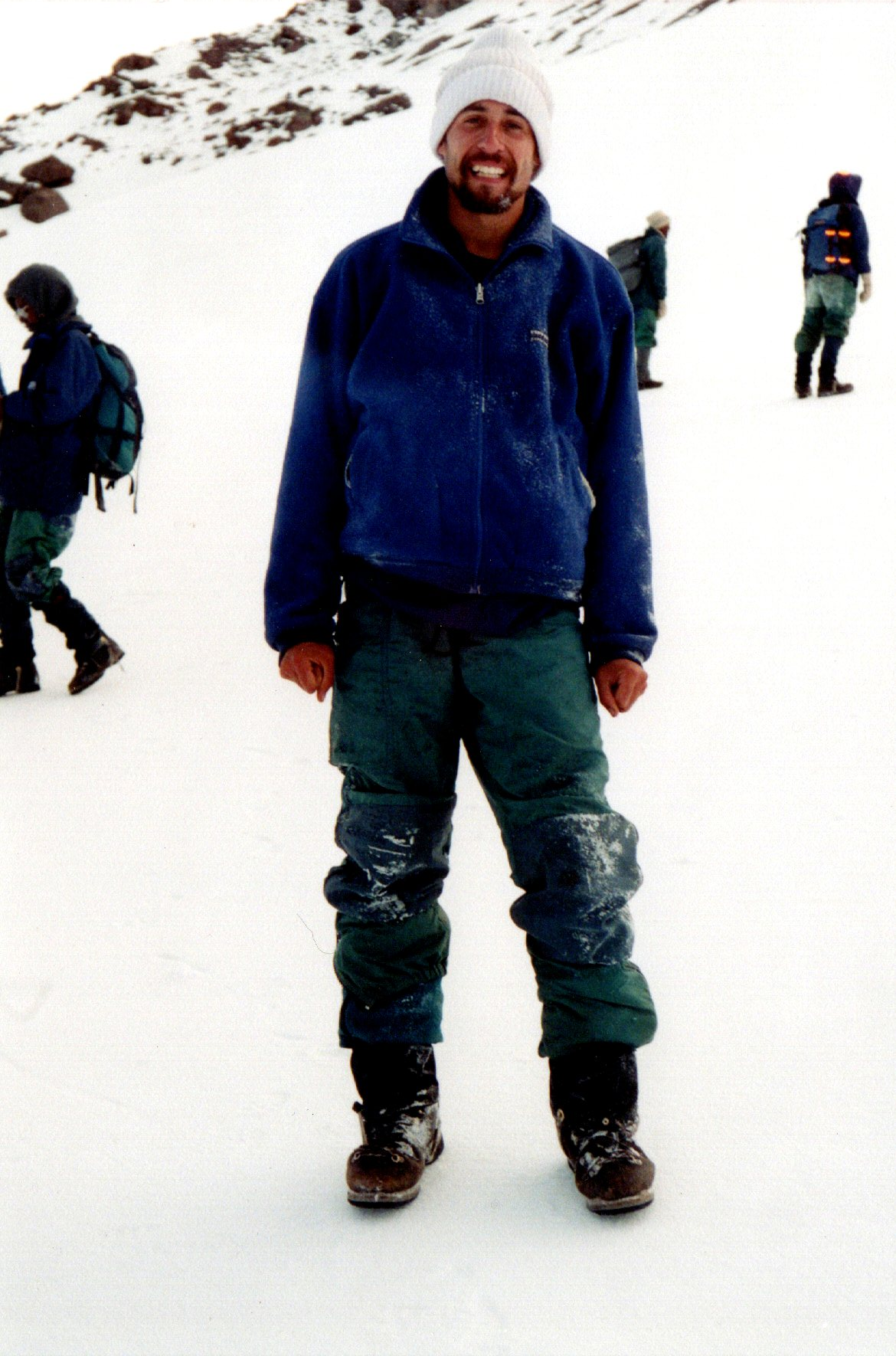
Took pictures with Nelson behind me, then with the Kenyan flag on the point.
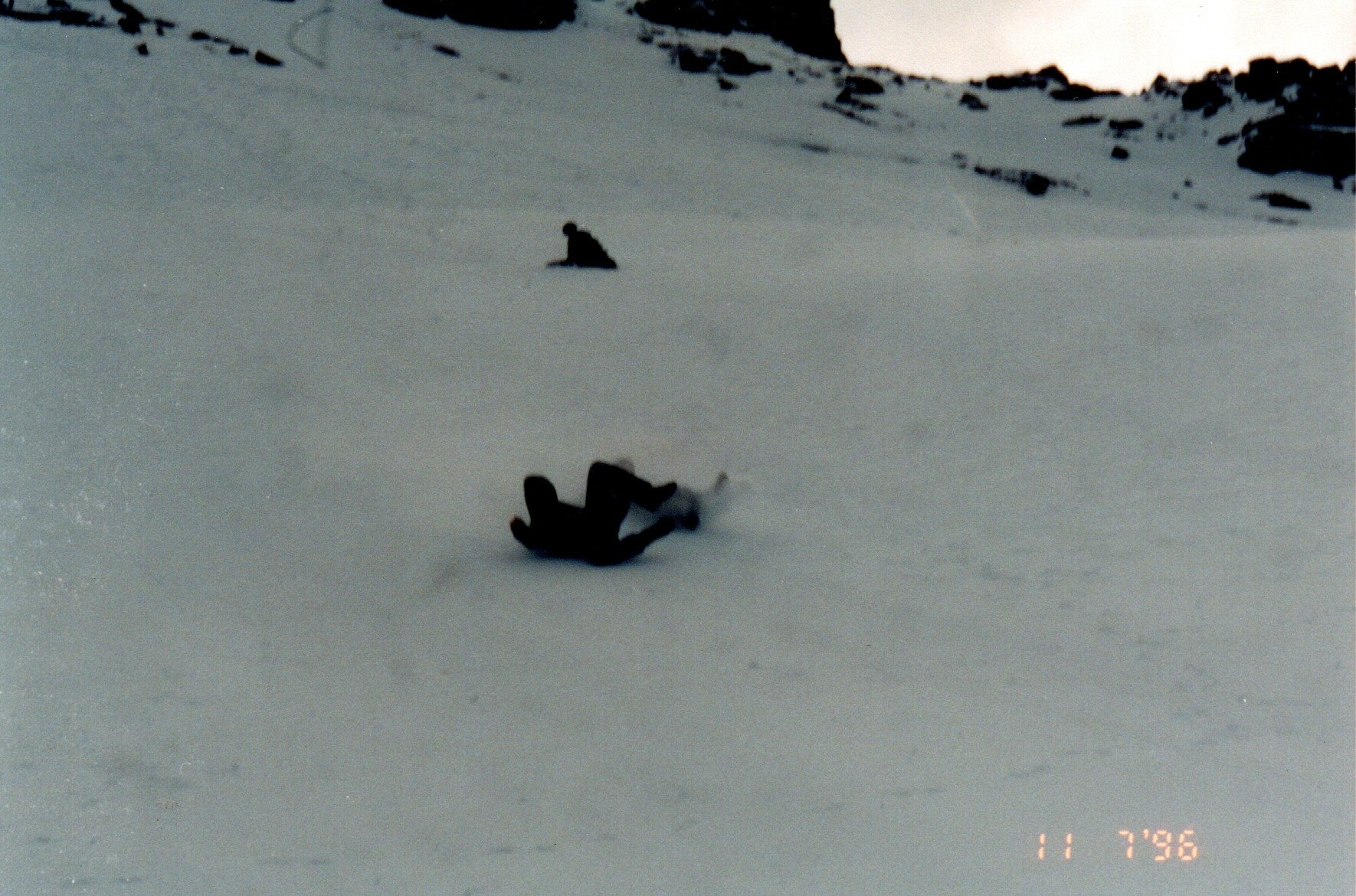
We slid down Lewis Glacier.
Took pictures.
You could slide fast and for a long way.
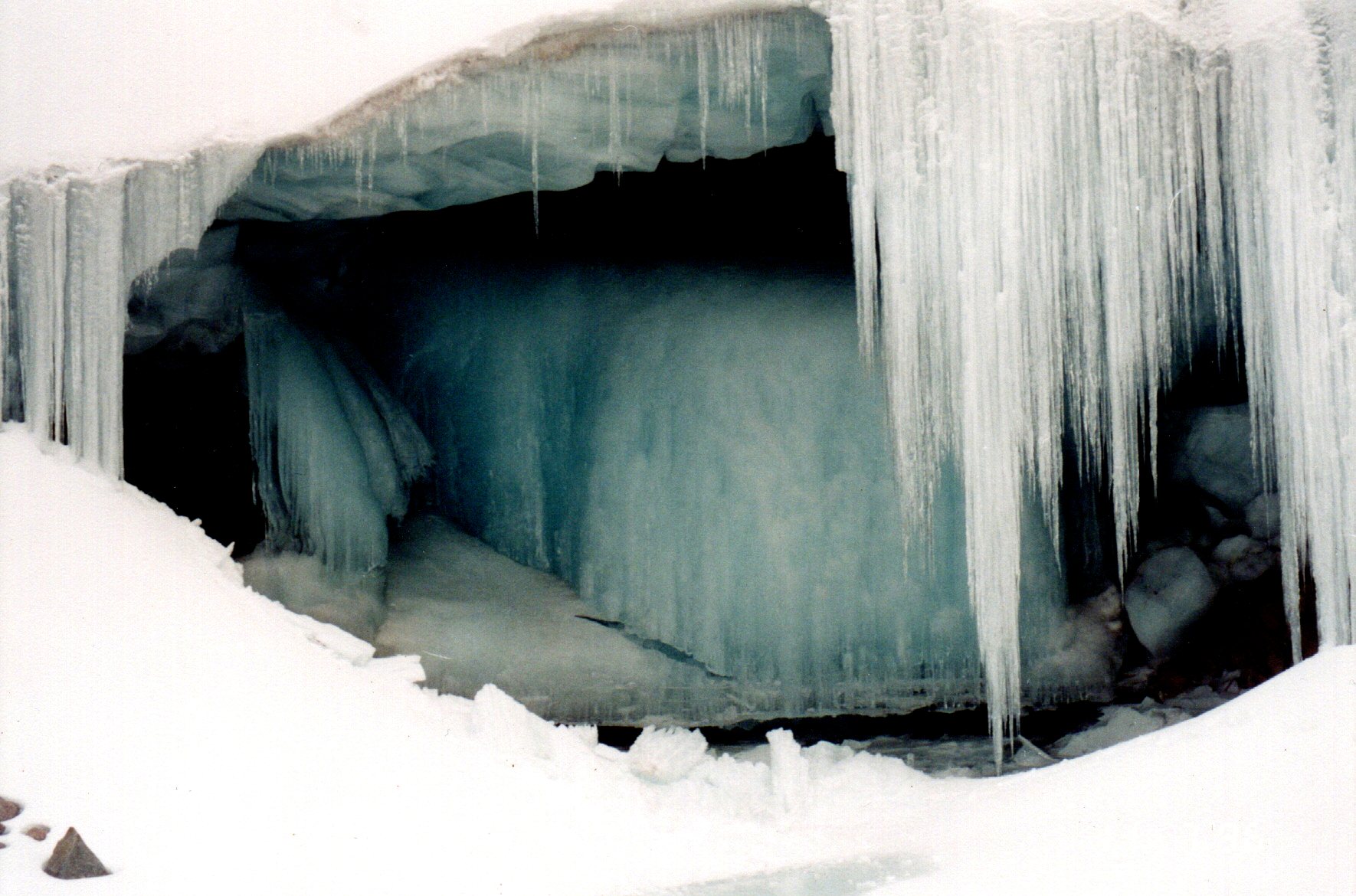
Took a picture of an ice cave where the glacier is melting near Austrian Hut.
My notes say Lewis was the highest glacier on the equator.
We also learned about hypothermia and weather.
Camped at Enchanted Lake.
Day 12 — November 8, 1996
Climbed Mt. McMillan to just below peak.
The rest of the day's notes are mainly knots, bowlines, and first aid for athletic injuries, including sprains and strains.
Day 13 — November 9, 1996
Hiked to Hidden Tarn.
Tomorrow we will be left to ourselves for the hike back to Naro Moru.
Voted this morning for a leader to lead each group out.
The two who won were the only two that I would have suspected would win.
Our course notes continued with first aid and leadership.
Day 14 — November 10, 1996
Today the instructors will be at Mackinders Camp.
Tomorrow until 9 they will be at Mackinders, then will travel on the Naro Moru track, stopping at Met Station.
Then at NOLS from the 13th on to the 15th.
Go along road if late on the 15th.
Can pass message through River Lodge vehicle.
Did not make it all the way to Lake Hohnel, the first campsite.
The valley we had to go through was all cliffs and seemed to me to be quite dangerous.
There was no safe way down.
Day 15 — November 11, 1996
Didn't make it to the next campsite either, but made it to the Northern Naro Moru River and into the forest.
Day 16 — November 12, 1996
The journal ends here. I wrote the heading "Day 16", but nothing beneath it.
The course itself continued through November 15.
Looking Back
Nearly thirty years later, what strikes me most is how little space I gave some of the biggest moments. A hyena ran into our tent and hit my leg; a few lines later I was writing about baking cornbread. We climbed high on Mount Kenya, slid down Lewis Glacier, slept beside mountain lakes, and eventually were sent out without the instructors to find our own way back toward Naro Moru.
The journal is not a polished account of the trip. It is simply what I wrote while I was there, and that is why I wanted to preserve it.
Be the first to like this Story.